Lately I have received many phone calls from my friends and clients telling me about the discomfort in their tommy and how bad they feel about that, how confused they feel not knowing how to eat and how much this situation affects them to follow their normal social life.
Why do we feel like this sometimes?
First of all, we should know that if our gut lacks gut-microbe diversity or there’s an imbalance between good and harmful bacteria, we will experience a range of health issues—aside from the obvious occasional gas, bloating, constipation and diarrhoea.
When the intestinal lining is damaged, food that is partially digested can leak into the bloodstream, which can be manifested in our skin with a range of symptoms including acne and rosacea.
Not only that but we can experience difficulty concentrating and poor memory which often point to signs of an unhealthy gut, because the gut and the brain are connected via the vagus nerve, which is a communication pathway. A damaged gut lining can cause inflammation, including inflammation in the brain.
What we can do to prevent situations like that?
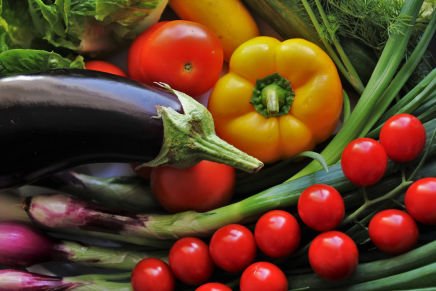
1. Start a diverse and colourful diet
There is a lot of evidence that explains that most people who are sick with a gut-related disease-or diabetes and allergies-have one thing in common: a lack of their microbial diversity. It’s clear that a healthy gut is a diversely-populated gut, and one of the best ways to build a diverse bacterial community is to eat different healthy food and a colourful diet.
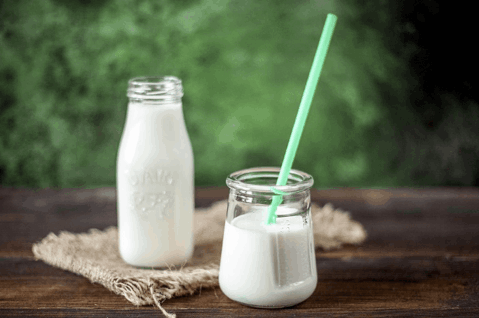
2. Start including always Kefir and Yogurt in your diet.
Do you know that a 2011 study found that, when a strain of bacteria that’s common to yogurt was ingested by mice, it regulated their moods. This has led scientists to believe that this bacteria could have the potential to treat depression in humans, too. Including cultured dairy products, such as yogurt and kefir, introduces healthy bacteria into our gut. Those bacteria may not take up permanent residence there, but they can have positive effects even while passing through.
3. Start cooking whole grains
Ancient grains like quinoa, barley, chia and oats have high fibre content that can not be broken down by our intestines. That means that they arrived intact in our colon and become food for the microbes by helping to boost their population. When both the animals and people are feed with whole grains, we note a big increase in microbial diversity.
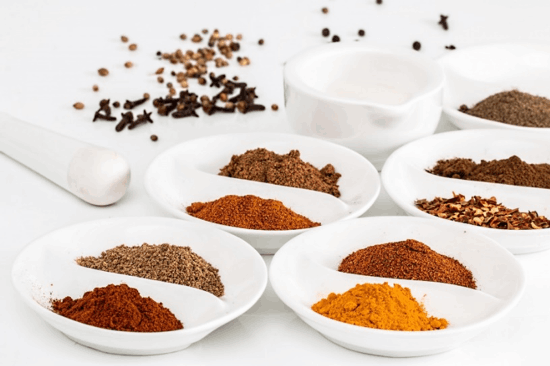
4. Start spicing up your diet
You might have already heard that using spices like garlic, turmeric or ginger is good because they have antibacterial chemicals, but those are not bad for our good bacteria, they are bad for our bad bacteria.
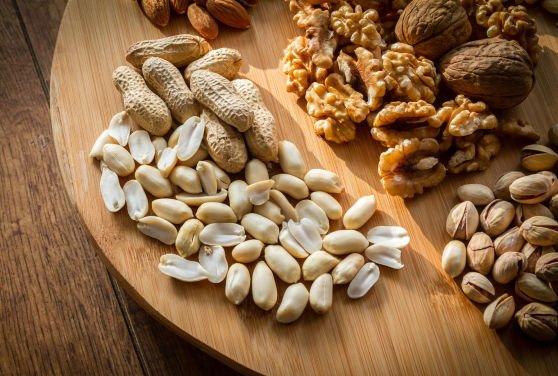
5. Start nuts snacking
Like grains, nuts are also packed with fibre help us to keep our colon clean and prevent colon cancer.
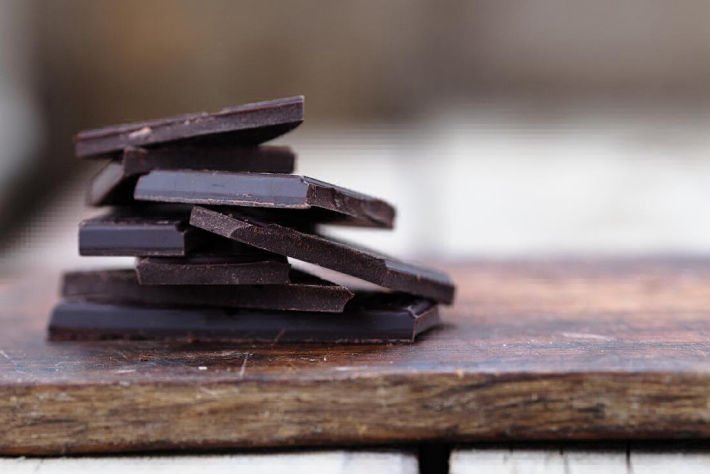
6. Start switching in dark chocolate
It is always hard when it comes to choose the chocolate we love because the truth is that we love all kinds of them, but the black chocolate is the queen of all.
Dark chocolate contains fibre and plant-based molecules called polyphenols. Since both of these compounds are difficult for the intestines to digest, they can travel deep into our gut where they’re fermented and metabolized by microbes. This process in turn releases health-promoting anti-inflammatory chemicals.
We all know that antibiotics usage can destroy our intestinal microbes because as soon as they arrive in our guts they destroy microbes indiscriminately. We also know that microbes are becoming more and more resistant nowadays and there is no other therapeutic alternative at the moment against them.
So…instead of avoiding antibiotics altogether or failing to take the full dosage prescribed by the doctor consider taking supplement probiotics temporarily while using antibiotics.
In the end do not forget:
A healthy, colourful and diverse diet make the whole difference and is the best armour to your gut.